October 13, 2026
What Happens to Solar Panels During Reroofing?
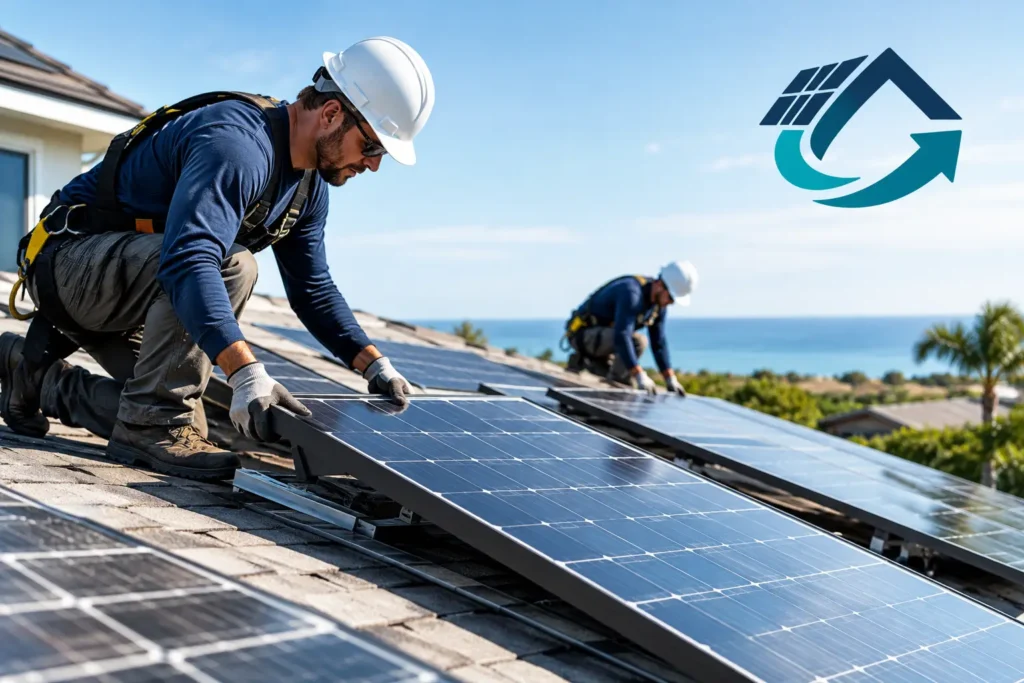
A roof replacement can move quickly once shingles begin coming off. A solar array cannot be treated the same way. What happens to solar panels during reroofing is a controlled detach-and-reset process: the system is documented, safely taken down, protected while the roof is completed, then reinstalled and checked before the job is closed.
For a homeowner, that process protects more than panels. It protects mounting components, roof penetrations, electrical connections, equipment records, and the confidence that comes from knowing who owns each handoff. For a roofer, it creates a clear, roof-ready work area without putting solar removal on a roofing crew that may not be responsible for PV equipment.
Why Solar Panels Must Come Off for a Roof Replacement
Most reroofing projects require full access to the roof deck, underlayment, flashing, and shingles beneath the array. Panels, rails, attachments, conduit, and related equipment can block that access. Leaving an array in place while roofing around it may create compromised roof work, inaccessible penetrations, and unnecessary risk to the solar equipment.
The exact scope depends on the roof design and the system itself. A small array on a simple roof plane may be straightforward. A larger system with multiple roof faces, older hardware, attic access constraints, battery-related equipment, damaged components, or prior installation issues needs more evaluation before a schedule is set.
In Florida, reroofing often follows storm damage, active leaks, aging shingles, or insurance-directed repairs. Those circumstances can add urgency, but urgency should not replace order. Solar work needs its own documented scope, clear access plan, and coordination with the roofing schedule.
What Happens to Solar Panels During Reroofing, Step by Step
1. The array is documented before work begins
A disciplined detach-and-reset starts with a condition review. The solar team records the visible layout, panel count, equipment configuration, mounting details, and apparent pre-existing conditions. Photos and identification notes establish a reference point before anything is moved.
This step matters when a system already has a production concern, a damaged panel, aging wiring, or a fault that predates reroofing. Documentation does not assign blame or guarantee an unrelated problem can be corrected. It does create a clear record of observed conditions and helps separate the solar scope from roofing work or later repair decisions.
Homeowners should expect the scope to identify what is included and what may require separate approval. Replacement panels, specialty mounting hardware, corrective electrical work, and concealed conditions are not assumptions. They should be reviewed and quoted if needed.
2. The PV system is professionally taken offline and disconnected
Before removal, qualified solar personnel place the PV system in the appropriate safe condition for the work. This is not a shortcut task for a roofing crew or a homeowner. Solar equipment can include energized conductors, rooftop connections, inverters, rapid shutdown components, and monitoring equipment that require informed handling.
The goal is to preserve an organized path back to reinstallation. Connections and components are identified as they are handled so the system can be returned to its intended configuration when the roof is ready. Every panel, every connection, every time is a practical standard, not a slogan.
3. Panels, rails, and related hardware are removed with controlled handling
The visible panels are only one part of the assembly. The removal scope may also include rails, clamps, flashing components, attachments, wire management materials, and rooftop electrical pathways needed to expose the roof correctly.
Panels should be handled as valuable electrical equipment, not stacked casually beside demolition debris. Protected staging helps reduce the risk of impact damage, frame distortion, scratched glass, misplaced hardware, and unnecessary exposure while roof work is underway. A clean staging area also helps the roofer maintain an orderly jobsite.
Older systems deserve particular care. Components can become weathered, hardware may no longer match current mounting requirements, and hidden conditions may only become visible after removal. A careful provider explains these possibilities early rather than promising that every existing part will automatically be reused.
4. The roofer receives a clear work area
Once the solar array and required mounting components are removed, the roofing team can access the full work area. This is the handoff that prevents one trade from working around the other.
The solar provider and roofer should agree on schedule ownership, roof-ready timing, access, and notification requirements before the project begins. The solar team needs confirmation that roofing work is complete in the array area, roof surfaces are ready for reinstallation, and any needed repairs or changes have been approved. The roofer needs a dependable solar partner who will not leave rails, loose equipment, or open questions on the roof.
A reroof is not the time for vague timing such as “we will come back when the roof is done.” Weather, material delivery, inspection timing, and unexpected deck repairs can change a project. Direct communication keeps the handoff controlled.
Reinstallation Is More Than Putting Panels Back
After roofing is complete, the solar system is rebuilt on the renewed roof using the approved mounting approach and site-specific requirements. Precision reinstallation includes setting mounting components correctly, managing wire paths, securing the rail system, reinstalling modules, and restoring the system configuration with attention to roof integrity and equipment protection.
This is also where craftsmanship affects the long-term result. Roof penetrations and mounting work must be handled with care. Rails should be aligned, hardware properly secured, conductors protected and managed, and panels positioned without forcing damaged or incompatible parts into service.
There are occasions when the original layout cannot or should not be returned exactly as it was. Roof design changes, new vent placement, code-related considerations, damaged components, or the condition of existing equipment can affect the final plan. If panel relocation or additional corrective work is needed, it should be addressed through a defined scope and approval, not an on-the-fly decision.
The Final Check Documents Observed Operation
A system should not be considered complete simply because the panels are back on the roof. The closeout stage includes electrical checks, visual inspection, and observed operation testing appropriate to the project scope. The team may verify that equipment starts correctly, review visible connections and array condition, and document findings for the homeowner and roofer.
A final production check records observed operation at that time. It does not guarantee future energy production, erase unrelated equipment issues, or override the terms of a panel manufacturer, inverter provider, installer, or other third party. If a pre-existing fault, failed component, communications issue, or additional repair need is identified, it should be documented clearly so the homeowner can make an informed decision.
For homeowners, written closeout information provides useful proof of the work performed and any unresolved items. For roofing professionals, it confirms that the solar scope has been handed back in an organized condition.
Questions to Settle Before Scheduling Solar Detach and Reset
The smoothest projects are planned before the roofing date is locked in. Confirm who is responsible for the solar detach and reset, who communicates schedule changes, where equipment can be safely staged, and when the roof will be released for reinstallation. The solar provider should also know the panel count, roof type, array location, inverter type if known, reason for reroofing, and whether there are active leaks, storm damage, or known solar concerns.
Ask for a written scope that distinguishes standard removal and reinstallation from replacement parts, specialty hardware, diagnostics, panel relocation, or corrective work. That clarity protects everyone from assumptions. It also gives the homeowner one protected system rather than a gap between the roofing and solar trades.
Remove and Restore Solar LLC coordinates photovoltaic detach-and-reset work for reroofing, repairs, and storm-related roof access across Florida, including Melbourne and Brevard County. Its own solar detach-and-reset workmanship includes a 10-year leak and labor warranty at no additional cost, while third-party equipment and installation warranties remain governed by their providers’ terms.
If your roof project needs solar removal, call the office at 321-322-7746 or email admin@removeandrestoresolar.com to discuss scheduling. Have your roof timeline, panel count, roof type, photos if available, and any known equipment concerns ready so the scope can be defined before work begins. A reroof is a major reset for a home. Your solar array deserves the same measured care.