October 21, 2026
Residential Solar Remounting Guide for Roof Work
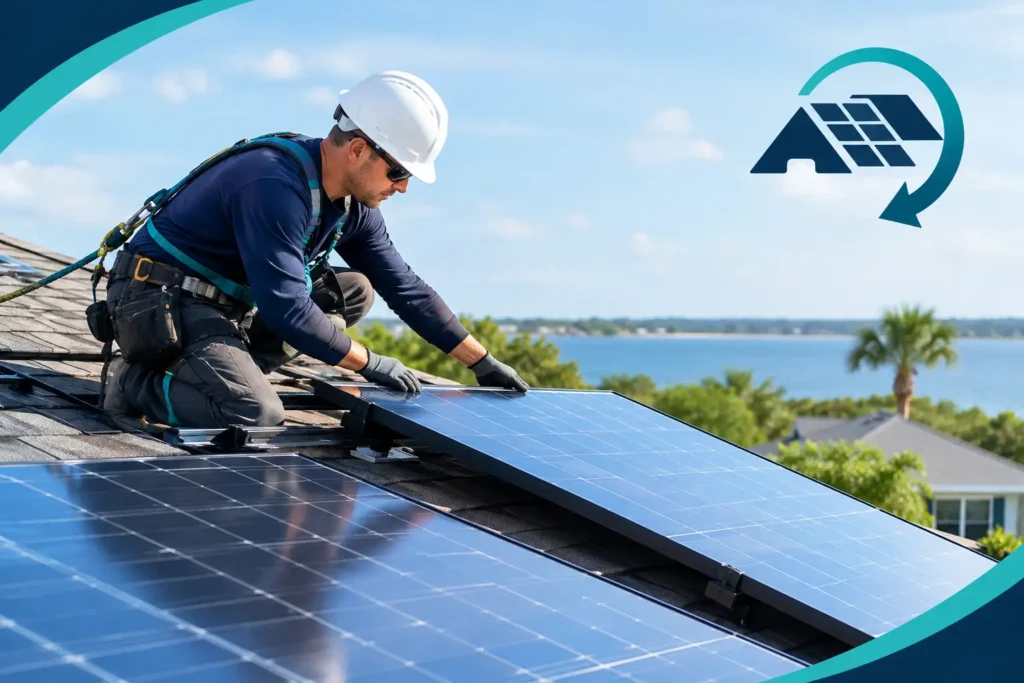
A roof replacement can protect your home for decades, but it also puts one of its most valuable systems temporarily in motion. A residential solar remounting guide should do more than describe taking panels down and putting them back. It should show how the array is documented, protected, coordinated with the roofer, reinstalled, and checked so no one is left guessing what happened to the equipment.
For Florida homeowners, that organization matters. Heat, wind exposure, roof penetrations, older mounting components, and tight construction schedules all affect a solar detach-and-reset project. The right process protects the PV system as one connected assembly, not as a stack of individual panels.
A residential solar remounting guide starts before removal
The strongest solar remount begins while the array is still operating on the roof. Before work begins, the solar contractor should review the visible system layout, accessible equipment, mounting arrangement, roof access, and the planned roofing scope. This creates a practical work plan and identifies conditions that may need separate approval, such as damaged components, specialty mounting hardware, inaccessible wiring, or panel relocation.
Pre-work documentation is a core safeguard. Clear photographs of the array, equipment labels, conductor routes where visible, attachment locations, and existing conditions create a record before roofing activity begins. Panel positions and components should be labeled so the system can be returned to its planned configuration rather than reconstructed from memory.
This step also establishes an honest baseline. If an inverter fault, cracked module, damaged conduit, communication issue, or performance concern is already present, it should be recorded as an existing condition. A remount can address the solar scope approved for the project, but it should not be presented as a cure for unrelated equipment problems.
The remount process, from roof access to closeout
A disciplined project follows a sequence because each handoff affects the next one. The goal is not simply speed. It is a clean, roof-ready work area for the roofer and a controlled path back to a properly mounted PV system.
1. Confirm the scope and schedule ownership
Solar work and roofing work need a shared schedule, but they are separate scopes. The homeowner, roofer, and solar contractor should know who is responsible for confirming the removal date, the roof-ready handoff, the expected roofing completion date, and the reinstall window.
Roofing schedules can shift because of weather, material delivery, structural findings, or inspection requirements. Good coordination accounts for those changes without leaving solar equipment exposed, misplaced, or in the way. Before removal, confirm site access, staging space, roof completion expectations, and who will communicate a schedule change.
2. Document and safely disconnect the accessible solar scope
PV equipment must be handled by qualified professionals using appropriate safety procedures. The work should begin with system documentation and controlled disconnection of the approved solar scope. This is not a homeowner task. PV equipment can involve energized conductors and equipment-specific requirements even when the system appears inactive.
Each panel, rail section, attachment component, and accessible electrical item should be managed deliberately. The objective is to preserve order from the first component removed through the final reconnection.
3. Remove panels and mounting equipment without shortcuts
Panels are not roofing debris. They are glass-faced electrical products with frames, junction boxes, connectors, and manufacturer-specific handling considerations. Careful removal reduces the risk of impact damage, connector strain, misplaced hardware, and confusion during reinstallation.
Depending on the written scope, removal may include modules, rails, clamps, flashing assemblies, attachments, accessible wiring management, and related rooftop hardware. Not every system or roof requires the same work. Older systems, unusual roof geometry, corroded components, tile roofs, and arrays installed around vents or other roof features can require additional review.
If a component is damaged, obsolete, incompatible with the new roof assembly, or otherwise unsuitable for reuse, that is a separate decision. Replacement parts, specialty hardware, and corrective work should be identified and quoted before they are installed whenever practical.
4. Stage equipment as a protected system
Where equipment sits during roof work is as important as how it comes down. Panels should be staged on padded racks or another protected arrangement that keeps them organized, supported, and away from jobsite traffic. Hardware and electrical components should remain grouped and labeled so they do not become mixed with roofing materials or other construction debris.
A clean staging plan also helps the roofer. The crew gets a usable work area without needing to manage unfamiliar solar equipment, while the solar contractor retains ownership of the PV materials. Every panel, every connection, every time is easier to account for when the system is staged with purpose.
5. Reinstall for the completed roof assembly
Reinstallation should begin only after the roof is ready for the solar scope. The new roof surface, penetrations, flashing approach, layout conditions, and access points must support the planned mounting work. This is where coordination protects both trades: the roofer completes the roof system, and the solar contractor performs the approved mounting and PV work without improvising around an unfinished surface.
A precision reinstallation includes setting mounting components according to the applicable system design and site conditions, rebuilding rails and modules in their documented layout, managing accessible wiring, and making the necessary approved connections. The details matter because a visually straight array is not enough. Mounting, water-management components, conductor routing, equipment compatibility, and electrical connections all need attention.
For a roof replacement in Melbourne, Brevard County, or elsewhere in Florida, weather exposure adds another reason to avoid hurried reinstallation. A roof-mounted PV system must be treated as one protected system, with workmanship that respects both the roof and the equipment above it.
6. Perform final checks and document the handoff
A closeout should provide more than a statement that the panels are back on the roof. The solar contractor should inspect the completed work, review accessible connections and equipment condition within the approved scope, and perform production or operational checks using appropriate test equipment where applicable.
The record should describe observed system operation and identify any unresolved faults or limitations found during testing. A final production check documents what was observed at that time. It does not guarantee future production, erase unrelated existing faults, or replace the terms of a manufacturer, installer, utility, monitoring provider, or other third party.
What homeowners should ask before approving a remount
The best questions are practical. Ask what is included in the written solar scope, how the equipment will be labeled and staged, what happens if damaged or non-reusable parts are found, and who confirms the roof is ready for reinstall. Also ask how final operation will be documented and what items may require separate approval.
It is reasonable to ask about workmanship coverage as well. Remove and Restore Solar LLC provides a 10-year leak and labor workmanship warranty on its solar PV detach-and-reset work at no additional cost. Third-party product, installation, and service warranties remain governed by each provider’s requirements and terms.
Homeowners should also distinguish between a standard remount and a system correction. Moving panels to a new roof location, replacing older equipment, changing array size, resolving a pre-existing electrical fault, or adapting to a different roof layout may involve additional design, materials, or labor. Those decisions deserve a clear quote rather than assumptions made on the roof.
When a remount needs a closer assessment
Some projects are straightforward, and others need more planning. A closer assessment is useful when the roof has storm damage, the system is older, equipment appears corroded, the array has known production issues, the original layout conflicts with new roof features, or access is limited. The assessment scope and any associated charge should be confirmed before scheduling.
This is also the time to identify whether the project involves only photovoltaic equipment. Solar pool-heating panels are a different system with different risks. Older pool panels may be brittle, and removal or replacement needs individual review based on array size, piping, pump distance, access, and site conditions. PV detach-and-reset terms should not be assumed to apply to pool-heating work.
A well-run remount gives the roofer a clear roof work area and gives the homeowner a documented return path for their solar investment. Craft over shortcuts is not a slogan when panels come off a roof. It is the difference between a rushed handoff and a controlled project with accountable closeout.
For a Florida PV detach-and-reset estimate, call the Remove and Restore Solar LLC office at 321-322-7746 or request a booking through the office scheduling process. Have your roof work timeline, property location, panel count, roof type, photos if available, and any known system concerns ready so the scope, access, scheduling, and approvals can be defined before equipment moves.