October 4, 2026
Can You Move Solar Panels to Another Roof?
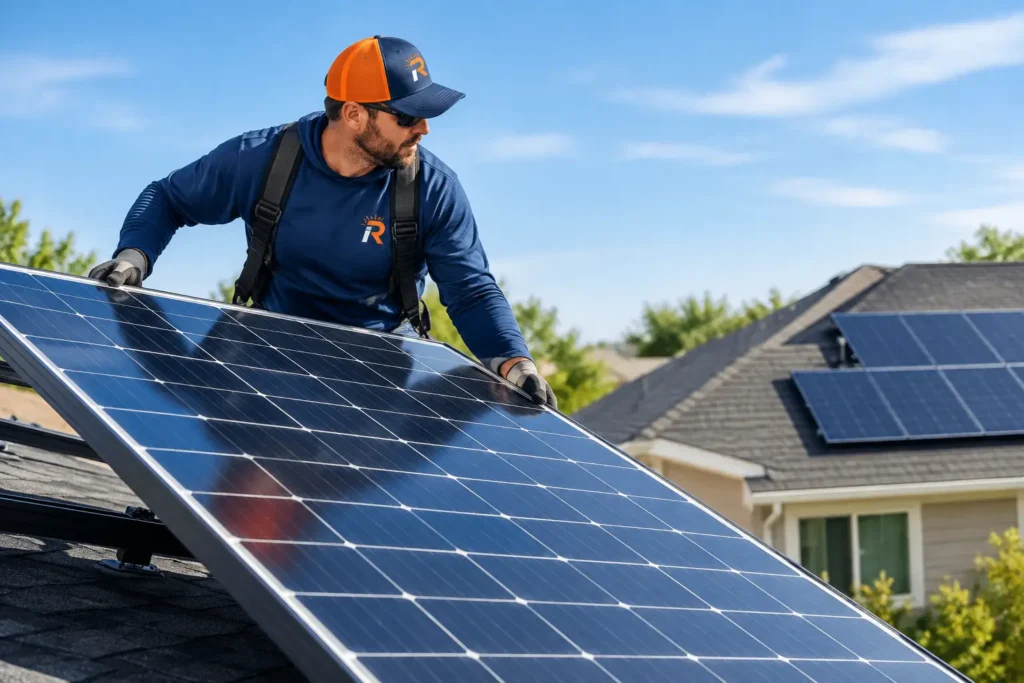
A roof replacement can turn a simple question into a high-stakes project: can you move solar panels to another roof without losing track of equipment, damaging the array, or creating new roof and electrical problems? In many cases, yes. But this is not simply a matter of taking panels down and putting them back up somewhere else.
A photovoltaic system is a connected assembly of modules, rails, attachments, wiring, electrical equipment, and roof penetrations. Moving it calls for a deliberate detach-and-reset scope, clear coordination with the roofer, and documented testing when the work is complete. The goal is not speed for its own sake. The goal is one protected system, handled with care at every transition.
When Moving Solar Panels to Another Roof Makes Sense
Homeowners usually consider relocating an existing array for one of three reasons: the current roof needs replacement or extensive repair, a better roof surface is becoming available, or exterior construction makes the original panel location impractical. In Central Florida, storm-related roof work can also create an urgent need to clear the roof safely while preserving valuable solar equipment.
Relocation can be practical when the receiving roof has appropriate usable area, orientation, structural support, access, and a layout that can accommodate the existing equipment. Yet the best new location is not always the roof plane with the most open space. Vents, ridges, valleys, skylights, shading, roof geometry, and required clearances can all affect the design.
Moving panels from one roof plane to another on the same home is typically more straightforward than moving them to a detached structure or a different property. A different building may introduce additional design, electrical, approval, or equipment-compatibility questions. The existing system’s age and condition matter as well. Older wiring, damaged modules, corroded hardware, or previous installation deficiencies may be uncovered once the array is removed.
That does not mean relocation is off the table. It means the work should begin with an honest assessment of the equipment and a written scope that separates standard handling from any corrective work that requires approval.
A Controlled Solar Panel Relocation Process
A well-managed move begins before the first panel comes off the roof. Pre-work documentation establishes what is present, how it is configured, and any observable conditions that could affect reinstallation. Photos, module counts, equipment identification, and visible condition notes create a useful record for the homeowner, roofer, and solar crew.
Document the system before removal
Before removal, the crew should identify the array layout, mounting arrangement, accessible electrical components, and visible equipment concerns. This is also the right time to align schedules with the roofing contractor. The solar array needs to be removed early enough to give the roofer a clean work area, while reinstallation should not begin until the new or repaired roof is ready to receive it.
Clear responsibility matters here. The roofer manages the roofing scope. The solar contractor manages the photovoltaic detach, protected staging, reinstallation work within the agreed scope, and operational checks. When those handoffs are not defined, a roof project can lose time and expensive equipment can be exposed to unnecessary risk.
Remove and stage equipment with care
Panels, rails, clamps, flashings, wiring components, and related hardware should be removed methodically and kept organized by system. Mixing loose hardware, leaving modules unprotected on site, or treating the array as generic construction material creates avoidable problems.
Protected staging is more than a tidy jobsite practice. Modules need stable, padded support, and components need to remain identifiable for reinstallation. Every panel, every connection, every time is the standard that protects against misplaced parts, preventable damage, and confusion after the roof work is finished.
If a module or mounting component is found to be damaged, unsuitable for reuse, or incompatible with the new roof layout, it should be documented and addressed separately. Replacement parts, specialty hardware, and additional corrective work are not assumptions within a basic move. They should be quoted clearly before proceeding.
Rebuild the mounting system for the receiving roof
Once the roof work is complete and the area is released for solar reinstallation, the mounting system is laid out for the new location. This step must account for the receiving roof’s construction, the approved array configuration, roof features, and the equipment being reused.
Precision reinstallation protects both the roof and the solar investment. Attachment locations, flashing details, rail alignment, module placement, and wire management all deserve careful attention. Shortcuts may save minutes during installation, but they can create difficult-to-trace concerns later, including roof leaks, loose components, poorly supported conductors, and restricted access for future service.
For Remove and Restore Solar LLC’s photovoltaic detach-and-reset workmanship, the company provides a 10-year leak and labor workmanship warranty at no additional cost. Manufacturer, installer, financing, and other third-party warranty terms remain governed by the applicable provider and their requirements. A panel move should be planned with those distinctions in mind rather than assuming all prior coverage automatically transfers.
Complete electrical checks and closeout documentation
Reinstallation is not the end of the job. The system should receive appropriate electrical and operational checks within the agreed scope, with results recorded at closeout. This can include documented observations of equipment status, visible array condition, and observed system operation.
A final production check is valuable because it records what the system was doing at the time of completion. It is not a promise of future output, and it does not erase unrelated pre-existing equipment faults, utility issues, monitoring problems, shading changes, or failures that develop later. If testing identifies an unresolved fault, the customer should receive a clear explanation of what was observed and what additional diagnosis or repair may be needed.
Questions to Ask Before You Approve the Move
The right solar contractor should be able to explain exactly what is included, what the roofer is responsible for, and what conditions may require a separate quote. Ask whether pre-work photos and equipment documentation are included, where panels will be staged, how the new array location will be confirmed, and what operational testing will be performed at closeout.
It is also reasonable to ask what happens if an existing component cannot be reused. A careful contractor will not promise that every older part will return to service unchanged. Instead, they will identify the condition, explain the available path forward, and obtain approval for replacement or additional work where needed.
For roofing contractors, a defined solar scope reduces a common scheduling bottleneck. The objective is a clean roof work area, direct communication around the handoff, and a disciplined return visit once the roof is ready. Solar crews should not burden roofers with PV equipment decisions, and roofers should not be expected to take responsibility for module handling or electrical reconnection.
Why Roof Coordination Matters More Than Most Homeowners Expect
A solar move can go wrong before any solar work begins if the trades are not sequenced properly. If the array comes down too early, equipment may sit longer than necessary. If roofing finishes without notice to the solar team, reinstallation may be delayed. If a changed roof detail affects the planned array location, the issue needs to be addressed before hardware is installed.
This is why a project-based scope is so useful. It gives everyone a shared reference for removal timing, staging expectations, roof readiness, reinstallation, and final documentation. It replaces vague assumptions with accountable handoffs.
For homeowners in Melbourne, Brevard County, and throughout Central Florida, that organization can make a demanding roof project feel manageable. You are not handing over a collection of expensive panels and hoping they come back in working order. You are establishing a controlled process for moving a connected rooftop system.
If you need to move solar panels to another roof, begin with the details that shape the scope: your property location, panel count, current roof condition, planned roofing dates, receiving roof location, and any known system concerns. Call Remove and Restore Solar LLC at 321-322-7746 to discuss scheduling and request a documented project estimate. A careful plan at the start gives your roof crew a clear path forward and gives your solar system the attention it deserves.