October 27, 2026
Solar Mounting Compatibility Before Roof Work
A roof replacement can expose a problem no one could see from the driveway: the solar array may not return to the roof exactly as it came off. Solar mounting compatibility is the discipline of confirming how the existing rails, attachments, flashings, modules, and roof assembly work together before a panel is removed. It is not a paperwork detail. It is what separates an organized detach-and-reset scope from a rushed reinstall built on assumptions.
For homeowners, this matters because a solar array is a valuable system made up of more than visible panels. For roofers, it matters because the roof needs a clean, safe work area and a dependable handoff. The right process protects both priorities: a roof ready for repair and a PV system returned with care, documentation, and a clear record of observed operation.
What solar mounting compatibility actually means
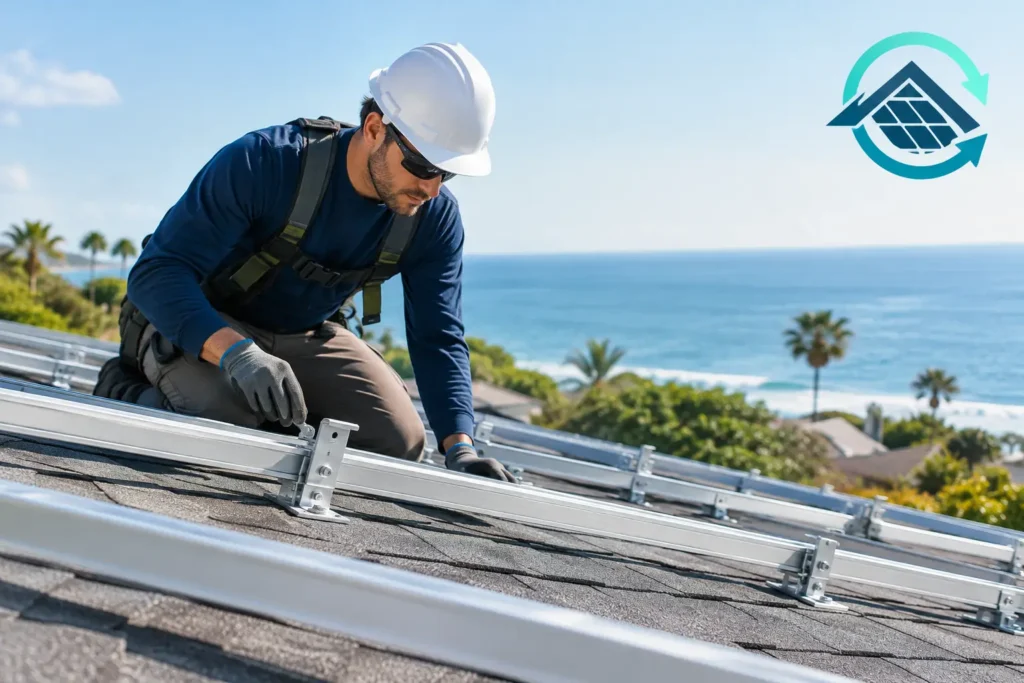
Most residential PV systems use modules secured to rails, rails secured to attachments, and attachments integrated with the roof through flashing or another approved water-management method. Compatibility means the pieces are appropriate for one another and for the roof that will exist after the work is complete.
That assessment begins with the actual equipment on the home, not a generic assumption about the brand of panel. Two arrays can look similar while using different rail profiles, clamps, attachment spacing, roof penetrations, grounding methods, or module frame requirements. A panel may be physically able to sit in a clamp, for example, without being installed in the clamping zone specified for that module.
Roof work can also change the conditions around the mount. New roofing materials, altered decking, replacement flashing, changed roof geometry, or previously hidden deterioration can affect how the reinstallation should proceed. The goal is not simply to put components back where they were. The goal is to evaluate the system as one protected assembly before reattachment.
Why compatibility should be reviewed before panels come down
The removal stage is the best time to collect information that will be difficult to recover later. Once rails and attachments are separated from the roof, a missing label, mixed hardware, or undocumented wiring route can create avoidable questions during reinstallation.
A disciplined pre-work review documents the module make and model when identifiable, inverter and electrical equipment information, visible mounting components, roof attachment locations, rail layout, wire management, and existing conditions. Photographs establish a baseline. Labels help keep modules and components associated with their original positions. That level of order is especially useful when a larger array is staged during a multi-day roofing project.
Compatibility review also identifies concerns early. Corroded hardware, damaged module frames, worn wire clips, cracked flashing, unsupported conductors, incomplete bonding components, or prior installation irregularities may not be included in a standard detach-and-reset scope. Finding them before the roof work is underway allows the homeowner, roofer, and solar team to address approvals and scheduling without forcing a last-minute decision.
The roof is part of the mounting system
Solar equipment and roofing are often treated as separate trades, but they meet at every attachment point. A mounting system can only perform as intended when the roof substrate, flashing approach, attachment hardware, and finished roofing assembly are considered together.
This is why coordination with the roofer matters. The roofer needs access to the full roof field, including areas beneath rails and attachments. The solar team needs confirmation that the roof is ready before reinstallation begins. Reinstalling too early can create rework. Waiting until the roofing work is complete but failing to confirm the final roof conditions can create a different set of problems.
The practical question is not, “Can the panels go back on?” It is, “Is the roof-ready handoff complete, and does the existing mounting approach remain appropriate for the conditions now present?” That question calls for clear communication rather than assumptions between crews.
Attachment locations and roof structure
Existing attachment points deserve close attention. The visible hardware may tell only part of the story. A careful scope considers attachment layout, apparent fastening condition, roof penetrations, and whether the roof work has revealed conditions requiring further review.
Not every existing component must be replaced just because roof work is occurring. At the same time, reusing hardware should not be automatic. Age, corrosion, manufacturer requirements, physical condition, and compatibility with the roof assembly all influence the decision. Specialty hardware, replacement components, or corrective mounting work should be identified and quoted separately when needed.
Flashing and water management
A solar mounting system must not compromise the finished roof. Flashing details are central to that outcome, particularly in Florida, where heavy rain and storm exposure make roof penetrations a serious concern.
The solar crew and roofing crew each have a defined role, but the handoff must be coordinated. Before attachments are reinstalled, the roofing work should be complete in the relevant area and the conditions for mounting should be confirmed. Remove and Restore Solar LLC provides a 10-year workmanship warranty on leaks and labor for its solar PV detach-and-reset work at no additional cost. Third-party product and manufacturer warranties remain subject to each provider’s terms.
Equipment compatibility goes beyond rails and clamps
Mechanical mounting is only one part of the review. The electrical side of the array also needs organized handling. Modules, connectors, junction boxes, home runs, conduits, grounding and bonding components, optimizers, and microinverters may all be part of the existing installation.
During a detach and reset, equipment should be handled and staged to reduce the risk of loss, impact damage, and mixed components. Padded racks, controlled storage, labels, and jobsite order are not cosmetic extras. They support correct reassembly and help create a usable record of what was observed.
Compatibility questions may arise when an older component is no longer available, when a connector type differs from another component, or when existing equipment shows damage or deterioration. These conditions do not automatically mean the whole system needs replacement. They do mean the work should pause long enough to define the issue, determine the available options, and obtain approval for any work outside the agreed scope.
A controlled process for a compatible reinstall
A careful project follows a sequence because each stage supports the next. First, the existing system is documented and the agreed solar scope is confirmed. Next, modules and related equipment are removed with attention to labeling, handling, and protected staging while the roofer gains the needed work area.
After roof completion and a roof-ready handoff, the mounting equipment is reinstalled or addressed according to the approved scope and site conditions. Modules are then returned to their proper positions, with attention to attachment, wire management, and bonding details. The final stage includes electrical checks and a production check that records observed operation and any unresolved faults.
A final production check is valuable, but it should be understood correctly. It documents the condition observed at closeout. It does not guarantee future energy production or eliminate unrelated pre-existing equipment problems. Written closeout records help homeowners understand what was completed, what was observed, and whether any follow-up remains recommended.
Questions to ask before approving roof and solar work
A homeowner does not need to become a solar installer to protect an investment. Asking direct questions can clarify whether the project is being managed as one coordinated system. Confirm what pre-work photos and equipment records will be created, how modules will be labeled and staged, who confirms the roof-ready handoff, and how additional hardware or corrective work will be approved.
Also ask what testing will occur at completion and what the closeout record will show. A clear answer should distinguish between work included in the written scope and items that may require separate authorization. This is particularly helpful after storm damage or when a system has existing performance concerns.
For roofers and property teams, the same clarity prevents scheduling friction. The solar scope should define when the array will be cleared, what access the roofing crew receives, what conditions trigger additional review, and who owns communication when the roof is ready for reinstallation.
A compatible solar reinstall is built on craft over shortcuts: every panel, every connection, every time. If your Melbourne, Brevard County, or Florida roof project requires PV detach-and-reset work, call Remove and Restore Solar LLC at 321-322-7746 to schedule a scope review. Be ready to share your roof-work timeline, system size, panel and inverter details if known, roof type, access conditions, and any visible damage or performance concerns.