November 10, 2026
PV Roofwork Requires a Protected Solar Scope
A roofer may be ready to begin Monday morning, but a solar array cannot simply be worked around or lifted aside. PV roofwork requires a controlled plan for the equipment above the roof and the roof system beneath it. When that plan is unclear, panels can be damaged, mounting locations can be lost, and the final handoff can leave everyone unsure whether the system is operating as expected.
For homeowners, the goal is not merely getting panels off the roof. It is protecting a valuable electrical system while creating a clean, roof-ready work area. For roofing contractors, the goal is a predictable handoff that does not put solar decisions on the roofing crew. A properly written solar scope gives both sides clarity before work begins.
Why PV Roofwork Needs Its Own Scope
Solar equipment is attached to the roof structure, connected through electrical pathways, and installed in a layout designed for a particular roof plane. Roof replacement, targeted repairs, storm restoration, skylight work, and other exterior projects can all require access beneath or around that equipment. The solar work must be planned as a related trade scope, not treated as an afterthought.
That distinction matters because a solar array has more than visible panels. There are mounting rails, attachments, flashing details, wire management components, electrical connections, grounding or bonding provisions, and system-specific equipment that may be affected by removal and reinstallation. Older systems can add another layer of uncertainty, especially when original hardware is discontinued or prior installation conditions are not immediately apparent.
A careful scope also separates included work from possible corrective work. A standard detach-and-reset may cover documented removal, protected staging, reinstallation of applicable existing mounting components, and operational checks. Damaged modules, deteriorated wiring, missing specialty hardware, roof-layout changes, code-related corrections, or previously existing equipment faults may require separate approval and pricing. Clear boundaries protect the homeowner from surprises and help the roofer keep the project moving.
The PV Roofwork Process, From First Photos to Closeout
A controlled project begins before anyone touches a panel. Remove and Restore Solar LLC approaches the work as one protected system – every panel, every connection, every time.
Document the system before removal
Pre-work documentation establishes the condition and arrangement of the array at the start of the project. This commonly includes photographs of the panel layout, visible equipment, labels, roof penetrations, wiring routes, and accessible system components. Panel positions and related equipment should be identified so the array can be returned in an organized configuration after roofing work is complete.
Documentation does not erase existing problems. It does create a useful record of observed conditions and supports accountable conversations if an issue is found later. If the system shows visible damage, alerts, unusual production history, or equipment concerns before the roof project, those conditions should be discussed before scheduling the solar scope.
Create a safe, roof-ready work area
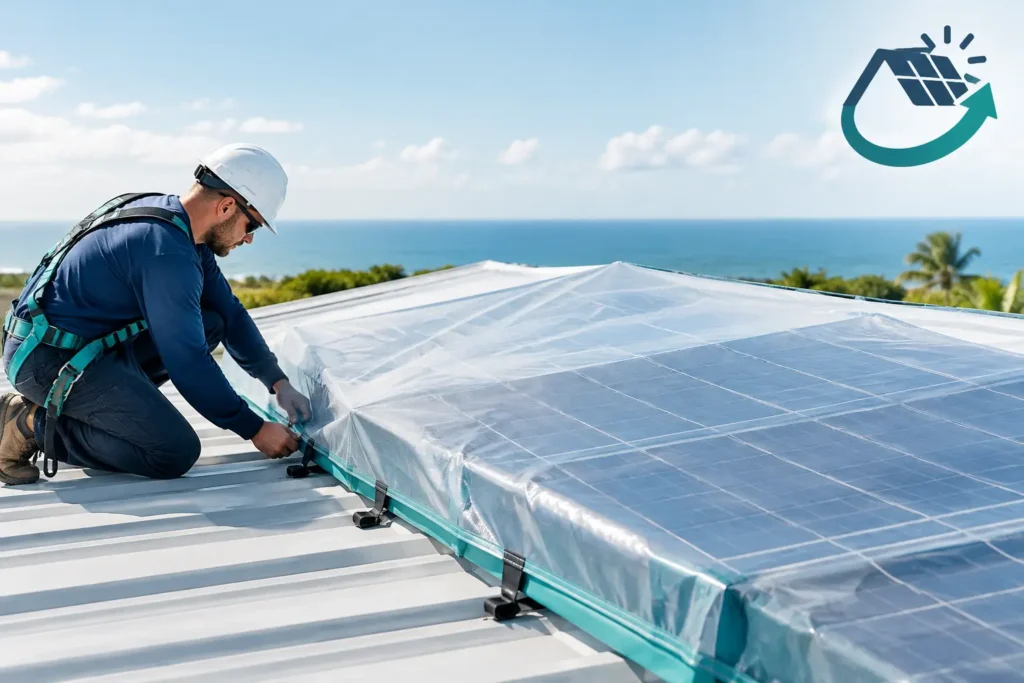
The removal phase is about more than clearing panels. Equipment needs to be handled methodically, staged away from active construction traffic, and protected from unnecessary contact, debris, and weather exposure. Panels should not become loose jobsite materials while tear-off crews, delivery teams, and roofing materials move through the property.
Protected staging supports both workmanship and schedule control. It gives roofers the access they need while reducing the risk of misplaced equipment or avoidable damage. Site access, ground conditions, gate clearance, landscaping, pool enclosures, and available staging space can all affect the plan. These details are worth addressing before the work date, particularly on constrained residential properties.
Coordinate the handoff to the roofer
The solar removal is complete only when the roofing team has the agreed work area available. This is where scheduling ownership matters. The roofer, homeowner, and solar provider should confirm the planned roof start, expected roofing duration, readiness for reinstallation, and the person authorized to approve changes that arise during the project.
Roofing schedules can shift because of weather, material delivery, hidden roof conditions, or crew availability. A solar partner should communicate directly with the roofer rather than leave the homeowner to relay technical details between trades. That coordination reduces idle time and helps prevent a reinstall crew from arriving before the roof is actually ready.
Review roof conditions before reinstallation
Once the roof work is complete, the reinstallation should begin only after the roof is ready for the agreed solar layout. If the roof geometry, penetrations, materials, or usable roof area have changed, the original configuration may not transfer exactly. A panel relocation, revised layout, additional hardware, or other corrective work may need separate review.
This is also the point to address components that cannot reasonably be reused. Reusing existing equipment may be appropriate in many cases, but it depends on condition, compatibility, manufacturer requirements, and the final roof configuration. Craft over shortcuts means pausing for written approval when the proper solution changes the expected scope.
Reinstall with mounting and wire management in mind
Precision reinstallation involves more than placing modules back on rails. Mounting work must be aligned with the finished roof system, while electrical conductors and connections need organized routing and secure support. The objective is a clean, serviceable installation that respects both the new roof and the existing solar equipment.
A warranty-aware reinstall also means recognizing that third-party manufacturer, installer, roofing, and equipment warranties remain subject to their own terms. No solar contractor should promise that every outside warranty will be preserved in every circumstance. What can be controlled is the quality of the detach-and-reset workmanship and the documentation supporting the completed scope.
Perform electrical checks and document observed operation
Closeout should include appropriate electrical checks and a final production or operational review based on the system and accessible equipment. Testing records observed operation at the time of completion, along with any unresolved faults or conditions requiring further attention. It is not a promise of future energy production, nor does it eliminate unrelated existing equipment problems.
The closeout record is valuable because it turns a verbal handoff into a documented one. Homeowners can see what was completed, roofing contractors can close their coordination loop, and future service providers have a clearer starting point if the system later needs attention.
What Homeowners Should Confirm Before Scheduling
The best PV roofwork projects are planned early, ideally before the roofer locks in a start date. Homeowners should be ready to share the property location, approximate panel count, roof project type, expected roofing schedule, and the roofer’s contact information. Clear photos of the array, inverter area, electrical equipment, roof access, and any visible system labels can help define the work before the crew arrives.
It also helps to explain whether there have been prior solar alerts, leaks, damaged panels, storm impacts, or changes in production. Those details do not automatically mean a larger project, but they may affect the assessment scope, equipment needs, and schedule. Assessment services and any related charges should be confirmed before scheduling rather than assumed.
For roofers and property teams, the key information is the roof-ready date and the approval path if conditions change. Our solar panel removal and reinstallation service is designed around that roofing schedule. A solar crew can protect its own scope, but it cannot make roofing decisions or authorize additional homeowner costs without direction. Defined contacts and written approvals keep the job moving without guesswork.
The Value of a Written Solar Scope
A low-level quote that simply says “remove and reinstall solar” leaves too much unanswered. It may not explain panel handling, staging, equipment documentation, mounting work, electrical checks, exclusions, schedule responsibilities, or final testing. Those omissions can become expensive when a roof project is already underway.
A useful written scope should identify what will be documented before work starts, how equipment will be handled, what mounting and reinstallation work is included, and what happens if damaged or incompatible components are found. It should also state that replacement parts, specialty hardware, and additional corrective work require separate review and approval when applicable.
For qualifying solar PV detach-and-reset work, Remove and Restore Solar LLC provides a 10-year leak and labor workmanship warranty at no additional cost. That commitment applies to its own detach-and-reset workmanship, not to unrelated system defects or third-party warranty decisions. The distinction is deliberate: accountability is strongest when the responsibility is stated plainly.
If your Melbourne, Brevard County, or Florida roof project involves an existing solar array, call the office at 321-322-7746 before the roofing schedule is finalized. Have your panel count, property location, roof project timing, roofer contact, and any known solar concerns ready for an organized estimate discussion. A protected system begins with a clear plan, not a rushed decision on the roof.