
October 31, 2026
Who Manages Rooftop Solar Work During Roofing?
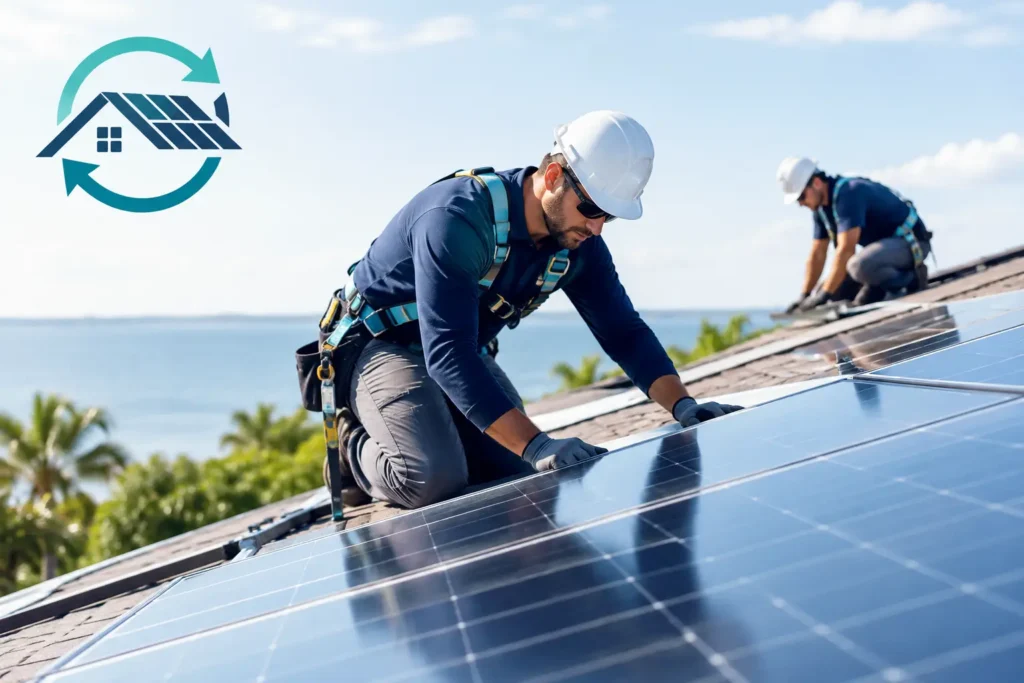
A roof replacement can stop cold the moment someone asks, who manages rooftop solar work? The roofer needs a clear deck. The homeowner needs costly PV equipment protected. And the system must be returned to service with a documented electrical check, not a hopeful switch-flip after construction ends.
The short answer is that rooftop solar work needs a defined solar lead, while the roofing contractor remains responsible for the roof scope. The best projects do not blur those lines. They create one coordinated plan: the solar specialist manages the PV detach-and-reset scope, the roofer manages roofing work and roof readiness, and the homeowner approves decisions that fall outside the written scope.
That distinction matters most when a roof is being replaced, repaired after a storm, or opened for access to components beneath an array. Panels, racking, wiring, roof penetrations, and electrical equipment all need deliberate handling. A project can move quickly without treating those details casually.
Who Manages Rooftop Solar Work? Define the Roles First
A roofing contractor may be the homeowner’s first call, and rightly so when the roof is the problem. But a typical roofing crew should not be expected to take ownership of photovoltaic disconnection, panel handling, array documentation, or electrical verification unless those responsibilities are specifically part of its qualified solar scope.
A solar detach-and-reset provider manages the equipment that makes up the array. That usually includes documenting the existing installation, labeling components and conductors as appropriate, removing and staging panels and mounting materials with care, reinstalling the system after the roof is ready, and recording observed operation during closeout testing. It also means identifying visible concerns that could affect a reinstall, such as damaged hardware, aged wiring, corrosion, incompatible roof details, or existing system faults.
The roofer manages the roof work itself: tear-off, deck and underlayment conditions, flashing, roofing material installation, and notice that the work area is ready for solar reinstallation. Solar mounting cannot be treated as an afterthought to the roof. The parties need to agree on the roof-ready handoff before the job starts, including which penetrations or attachment locations require review.
The homeowner remains the decision-maker. If the job reveals a needed replacement part, specialty hardware, a panel defect, or corrective work beyond the approved scope, the homeowner should receive a clear explanation and separate approval before that work proceeds. This is not delay for its own sake. It is how everyone knows what is included, what has changed, and who authorized the added cost.
Why One Point of Solar Accountability Matters
Solar arrays are not just panels on a roof. They are an interconnected system with mounting components, electrical connections, grounding or bonding elements, rapid shutdown equipment where applicable, and equipment that may have its own age-related issues. Moving one part affects the others.
When no one owns the solar scope, small questions become expensive problems. Where will panels be staged? Which hardware stays with which row? Has the roofer finished the flashing and released the roof area? Is a missing clamp a reuse item or a required replacement? Did the system show an existing fault before roof work began? A written scope turns these questions into planned checkpoints rather than jobsite guesses.
For Florida homeowners, weather adds another reason for disciplined ownership. Wind, rain, heat, and storm-related roof damage can complicate access and scheduling. Protected staging and direct communication between the roofing and solar teams help avoid having equipment sit exposed or a completed roof wait unnecessarily for an unclear next step.
The Solar Lead’s Work Before the Roof Is Opened
The safest solar projects begin before a panel is lifted. Pre-work documentation establishes a baseline for the equipment and jobsite. This commonly includes photos of the array, panel layout, accessible equipment, visible roof interfaces, and any existing damage or concerns. Labels and organized records help keep panels, racking components, and electrical connections associated with their original positions where practical.
The solar lead should also confirm the actual project scope. A straightforward detach and reset may become more involved when access is restricted, the roof geometry has changed, the array is being relocated, or the existing system has defects unrelated to the roof. An assessment may be needed to establish those conditions, and its scope and any charge should be confirmed before scheduling.
This early review is also the right time to coordinate dates with the roofer. The solar provider needs a removal window before roofing begins and a firm understanding of the expected roof-ready date. The roofer needs a clean, available work area. Homeowners need realistic expectations, especially when weather or roof repairs change the schedule.
Protected Handling Is More Than Carrying Panels Off the Roof
A panel can look intact and still be mishandled. Proper solar work considers how modules are lifted, where they are placed, how they are separated from abrasive surfaces, and how mounting hardware is organized. Padded racks or similarly protected staging methods reduce avoidable risk while the roof work is underway.
Care also applies to smaller components. Rails, clamps, attachments, conductors, connectors, and electrical equipment should not become an unlabeled pile at the edge of a jobsite. Every panel, every connection, every time is a practical standard, not a slogan. Organization makes it easier to reinstall accurately and identify when a component is missing, worn, or unsuitable for reuse.
There are trade-offs. Reusing serviceable equipment can make sense, but not every existing part should automatically return to the roof. Age, corrosion, damage, roof changes, and manufacturer requirements can affect that decision. Replacement parts, specialty hardware, and corrective work should be quoted separately when needed rather than folded into an assumption.
The Roofer’s Role in a Roof-Ready Handoff
The solar team cannot responsibly reinstall onto an unfinished roof area. Before reinstallation, the roofer should communicate that roofing work in the solar footprint is complete, the intended attachment areas are ready, and any roof-related changes affecting the array have been disclosed.
That handoff deserves more than a quick verbal confirmation. If new roof details, deck repairs, vents, drainage features, or changed geometry affect mounting locations, the solar provider needs to review them before proceeding. The goal is not to slow a roofing crew down. It is to prevent a precision reinstallation from being built on unresolved roof conditions.
Good coordination also establishes who communicates schedule changes. A delayed material delivery, weather event, or expanded roof repair can move the reinstallation date. A designated contact on both teams keeps the homeowner from having to relay technical messages between contractors.
What the Reinstallation and Final Check Should Prove
Once the roof is ready, the solar provider returns the array to its approved configuration or performs the separately authorized relocation work. Mounting work should follow the agreed scope and account for the roof’s finished condition. The team then completes appropriate electrical checks and documents observed system operation.
A final production or performance check is valuable because it records what the system showed at closeout. It can identify unresolved faults, communications issues, or conditions requiring further diagnosis. It does not guarantee future production, predict utility behavior, or eliminate unrelated pre-existing equipment problems. That honesty protects the homeowner from mistaking a completion record for a promise that every future issue has been solved.
Closeout documentation should be easy to understand. It may include jobsite photos, notes on installed or replaced materials, testing observations, and any open items requiring attention. If a provider offers a workmanship warranty, its terms should be clearly separated from panel, inverter, roofing, or other third-party warranties. Remove and Restore Solar LLC provides a 10-year leak and labor workmanship warranty on its own solar PV detach-and-reset work at no additional cost; third-party warranty coverage remains subject to each provider’s terms.
Questions Homeowners Should Ask Before Work Starts
You do not need to become a solar technician to manage the decision well. Ask who owns the PV scope, who will coordinate dates with the roofer, how equipment will be documented and staged, and what will be included in final testing. Also ask what happens if existing damage or unsuitable hardware is found.
The answer should be specific. “We handle it” is not the same as a written plan covering removal, staging, reinstallation, electrical checks, approvals for additional work, and closeout records. For homeowners in Melbourne, Brevard County, and across Florida, that clarity is especially useful when a roof project is already demanding attention.
A protected solar project is built on clear ownership, not assumptions. To discuss a PV detach-and-reset scope, call Remove and Restore Solar LLC at 321-322-7746 and provide your roof work timeline, panel count, system location, access conditions, roofer contact, and any known equipment concerns so the right work can be planned before the roof is opened.