
October 29, 2026
Solar Roof Access Without Risking Your PV System
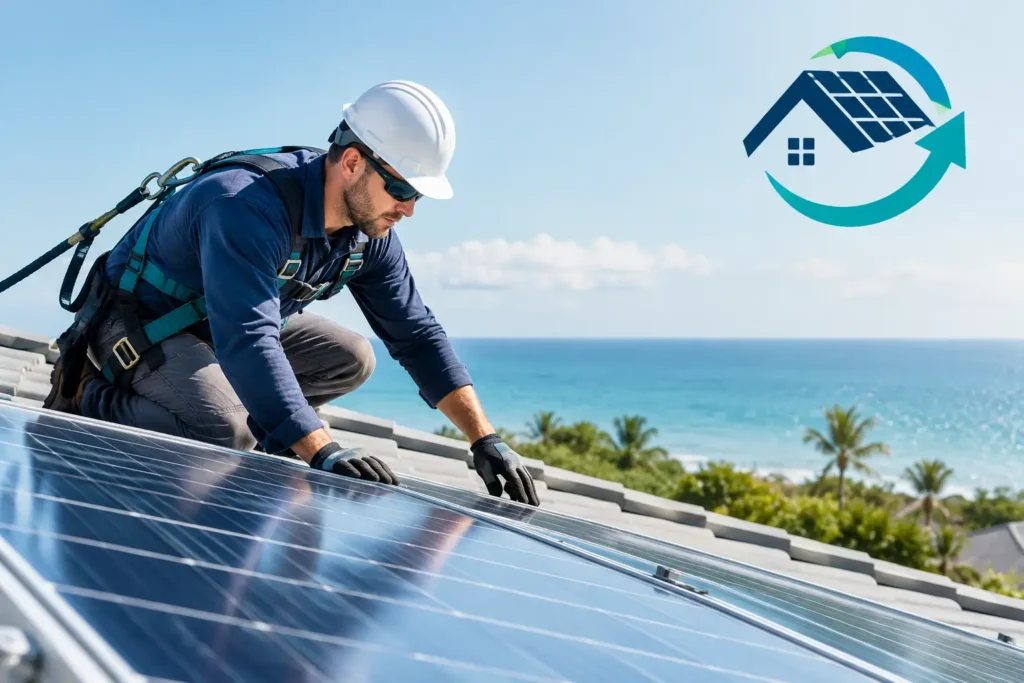
A roof leak rarely waits for a clear section of shingles. When photovoltaic panels cover the area that needs attention, solar roof access becomes the first job – and it has to be handled with the same care as the roof repair itself. Panels, rails, wiring, roof penetrations, and electrical equipment all need a controlled plan. Moving equipment quickly without documenting its condition or protecting it during staging can turn a roofing project into a solar problem.
For homeowners, the goal is straightforward: give the roofer a clean, safe work area while preserving one protected system. For roofing contractors and property teams, the goal is equally practical: eliminate a schedule bottleneck, clarify who owns each handoff, and avoid leaving solar decisions to the last minute.
What Solar Roof Access Actually Means
Solar roof access is not simply making room around a panel. It is the planned process of creating enough clear roof area for repairs, replacement, storm restoration, flashing work, or other exterior work beneath and around an existing PV array.
The required access depends on the roof scope. A localized repair may require a limited, carefully defined section of the array to be detached and staged. A full reroof commonly requires the entire affected PV system to be removed so the roofer can inspect, repair, and replace the roof surface without working around rails and attachments. If roof components under the array need attention, leaving the panels in place is usually not a meaningful option.
This distinction matters because a solar array is more than a collection of modules. Its mounting layout, wiring routes, attachment points, labels, and existing equipment condition should all be considered before work begins. A complete scope prevents assumptions about what will be removed, where it will be staged, what gets reinstalled, and what requires separate approval.
Why Roof Access Needs a Solar-Specific Plan
Rooftop PV equipment is a significant investment, but its value is not limited to the panels themselves. Rails, clamps, flashing, conductors, junction points, optimizers or microinverters, and roof penetrations work together. During a roof project, a missing fastener, mixed-up module, damaged connector, or poorly protected panel can create avoidable delays and corrective work.
Florida conditions add another layer of concern. Strong sun, sudden rain, wind, salt exposure in coastal areas, and storm-related roof damage make orderly handling especially important. Equipment should not be piled on a driveway, leaned against a wall, or left exposed to unnecessary jobsite traffic. Protected staging, clear labeling, and controlled handling are not extras. They are the practical safeguards that keep a roof project organized.
There is also a coordination issue. A roofer needs the deck clear when the roofing crew is ready. The solar team needs notice before reinstalling so the finished roof, flashing details, and work area are ready for a careful reset. When neither party owns that sequence, homeowners are often left trying to relay technical details between trades. A defined solar scope gives each team a clear point of responsibility.
A Controlled Process for Solar Roof Access
The best approach is process-led, not improvised. At Remove and Restore Solar LLC, the work is organized around documentation, protected equipment handling, roofer coordination, precision reinstallation, and closeout records.
Start with the roof scope and array layout
Before scheduling, confirm why access is needed and how much roof area the roofer requires. A repair near the array edge may call for a different plan than a full replacement. The assessment should identify the array size and layout, roof height and access conditions, visible equipment concerns, proposed roofing schedule, and whether there are relocation requests or known system issues.
Pre-work photos and equipment documentation establish a record of the system’s visible condition before the project begins. This is useful for homeowners and contractors alike. It also helps define whether the existing mounting arrangement can be returned as planned or whether specialty hardware, replacement parts, or additional corrective work may be needed. Those items should be reviewed and quoted separately rather than assumed to be part of a standard detach-and-reset scope.
Create a roof-ready handoff
Once the solar equipment is safely removed from the required roof area, the roofing team needs a clean handoff. That means the work zone is clear of panels, rails, and related rooftop components included in the approved scope. The roofer can then complete the underlying work without attempting to work around solar mounting hardware.
Timing is critical here. The solar crew should not return simply because the roofing project appears close to finished. Reinstallation should be scheduled when the designated roof areas, flashing, and penetrations are ready for the approved mounting work. If roof conditions, layout changes, or weather affect the sequence, the parties should communicate before the crew arrives. That protects the project schedule and prevents rushed decisions on the roof.
Stage equipment as equipment, not construction debris
Panels should be handled and staged with protection appropriate to the jobsite. Labeled placement, padded racks or controlled storage methods, and deliberate organization reduce the risk of breakage, confusion, and unnecessary handling. Rails, clamps, attachments, and electrical components should remain organized so the reinstallation can follow the documented layout rather than becoming a guessing exercise.
Not every roof project presents the same staging conditions. Tight lots, limited side-yard access, elevated rooflines, active construction zones, and weather can change the handling plan. The right method depends on the property and should be established before work starts.
Reinstallation Is Where Craft Shows
A roof replacement may look complete once the shingles are installed, but the solar scope is not complete until the system has been reinstalled with care. Precision reinstallation includes returning the approved mounting components, addressing applicable roof interfaces, routing and securing equipment correctly, and restoring the array according to the documented plan.
This is also where shortcuts have long-term consequences. Reusing a component may be appropriate in one system and not in another. Existing equipment may reveal wear, damage, or compatibility concerns once it is accessible. If replacement parts, specialty hardware, or repairs beyond the written scope are needed, those should be identified clearly and approved before proceeding. A homeowner deserves to know what is included and what requires a separate decision.
Applicable manufacturer requirements and third-party warranty terms still govern their own products. No contractor should imply that a detach-and-reset automatically preserves every outside warranty. What a careful solar partner can provide is workmanship accountability. Remove and Restore Solar LLC provides a 10-year leak and labor workmanship warranty on its solar PV detach-and-reset work at no additional cost.
What Closeout Testing Can and Cannot Confirm
After reinstallation, electrical checks and a final production check help document observed operation at the time of closeout. Depending on the system and scope, this may include reviewing equipment status, checking accessible connections, recording observed system behavior, and noting unresolved faults or existing concerns.
That record matters because it separates what was observed after the work from assumptions about future production. A closeout test does not guarantee long-term energy output, predict utility performance, or eliminate unrelated existing equipment problems. It does provide a practical snapshot of the system’s condition and a written basis for any next steps.
For homeowners, this is reassurance grounded in documentation rather than promises. For roofers, it is a clean completion point: the roof work is done, the array has been reinstalled, and the solar partner has documented the observed results.
When Partial Access May Be Enough
Full removal is not always necessary. If a repair is truly limited and the roofer can complete the required work with a clearly defined section of the array removed, partial solar roof access may reduce handling and project time. But partial removal only makes sense when it gives the roofing crew adequate room to do the work correctly.
Trying to preserve a few panels in place can be a false economy if it forces compromised repairs, leaves inaccessible roof areas, or creates repeated mobilizations. The right answer depends on the roof condition, repair location, array layout, and the roofer’s written needs. Craft over shortcuts means choosing the scope that protects the roof and the PV system together.
Prepare the Details Before You Schedule
A useful estimate starts with clear information. Be ready to share your roof work description, the roofer’s expected schedule, photos of the array and roof access, panel count if known, system type, whether the work is repair or replacement, and any concerns such as storm damage, visible corrosion, underperforming equipment, or requested panel relocation. If you are a roofer or property manager, include the roof-ready date and the specific areas that must be clear.
For solar roof access in Melbourne, Brevard County, or elsewhere in Florida, call Remove and Restore Solar LLC at 321-322-7746 to discuss the scope and schedule a booking conversation. The right next step is not a rushed removal date. It is a documented plan that gives the roofer the access they need and returns your solar equipment with the care it deserves – every panel, every connection, every time.