October 3, 2026
What to Do With Solar Panels After Hurricane Damage
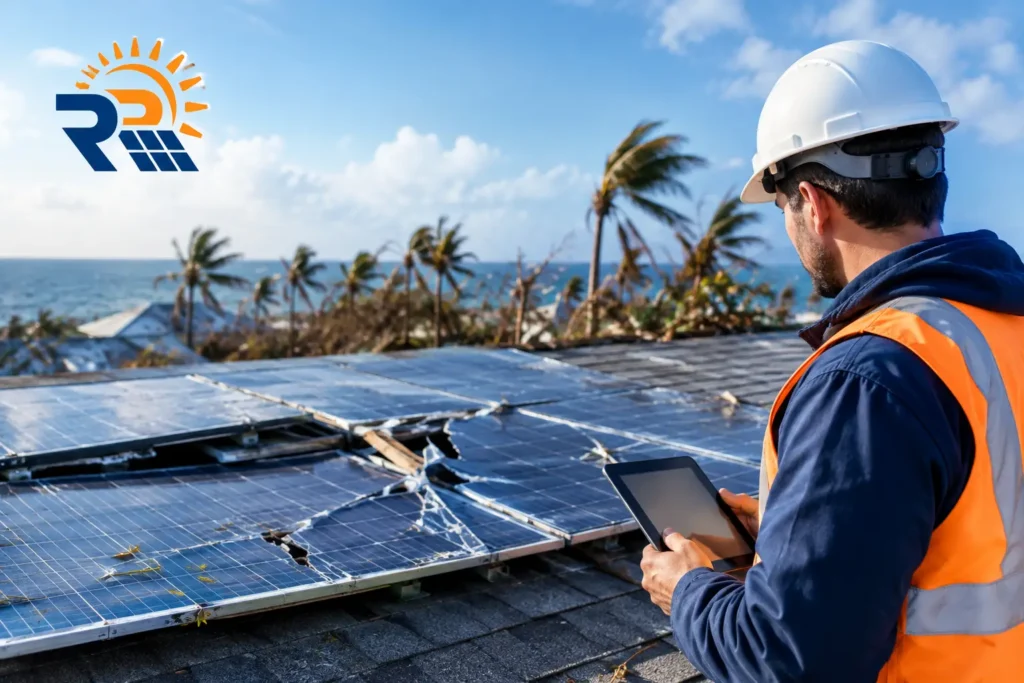
A hurricane can leave a roof looking intact from the ground while shifting tiles, lifting flashing, cracking mounts, or driving water beneath solar attachments. That is why solar panels after hurricane damage should be treated as part of the roof-restoration scope, not as an afterthought once roofing work has already begun.
For homeowners in Melbourne, Brevard County, and throughout Central Florida, the safest next move is usually not to turn the system back on repeatedly or ask a roofing crew to work around the array. It is to document what happened, stabilize the situation, and coordinate the solar and roofing work in the right order. Every panel, every connection, every time deserves a controlled process.
Start With Safety and Documentation
After the storm has passed and conditions are safe, look for visible changes from the ground. Loose panels, hanging conduit, damaged wiring, displaced racking, broken glass, roof debris beneath the array, or water stains in the attic all warrant prompt professional attention. Keep people away from damaged electrical equipment and do not attempt to disconnect, reconnect, or reposition solar components yourself.
Take clear photos and video of the roof, array, inverter area, electrical equipment, and any visible damage before cleanup or repair work changes the scene. Include wide views as well as close-ups of displaced panels, missing shingles, bent hardware, or water intrusion. If you have prior system photos, installation documents, or monitoring screenshots, preserve those too. They can help establish the equipment’s condition before and after the event.
If your system is displaying an alert or has stopped producing, record the message or status screen. A loss of production can come from storm damage, a utility outage, protective shutdown behavior, communications issues, or an existing equipment fault. The alert itself is useful evidence, but it is not a diagnosis.
Avoid a rushed roof repair around the array
A roofer may be able to repair exposed sections of a roof, but panels and mounting hardware often block access to the very areas that need inspection. Trying to patch around solar equipment can leave concealed roof damage unresolved. It can also create avoidable risk to panels, wiring, and attachments.
The better approach is to determine whether the roof work requires a partial or full PV detach and reset. That decision depends on where damage is located, the roofing scope, the condition of the mounting system, access around the array, and whether components need replacement. A small repair on the opposite side of the roof may not require solar removal. Damage beneath or adjacent to the array often does.
A Controlled Plan for Solar Panels After Hurricane Damage
Storm recovery works best when the solar scope is defined before the roofing schedule is locked in. The goal is a clean handoff: the roofer gets a clear work area, the solar equipment is handled correctly, and the homeowner knows which tasks are included and which items need separate approval.
1. Assess the visible condition and access needs
A professional assessment should identify the panel layout, roof areas affected, racking configuration, conduit paths, inverter equipment, and obvious storm-related concerns. It should also determine whether roof access, panel removal, or specialty handling is needed.
This is the time to clarify the assessment scope and any associated charges before scheduling. An inspection may include visual condition notes, photos, and planning for removal and reinstallation. More detailed diagnostic work may be needed when there are faults, damaged electrical components, or performance concerns.
2. Create a written solar scope
A dependable scope does more than state that panels will be removed and put back. It should explain how the equipment will be documented, labeled, disconnected by qualified personnel, staged, and protected during the roof work. It should address mounting work, anticipated electrical checks, responsibilities for scheduling, and what closeout documentation will be provided.
The scope should also distinguish standard work from conditions that cannot be confirmed until equipment is accessed. Cracked modules, damaged rails, corroded hardware, compromised wiring, or specialty mounting components may require additional corrective work. Those items should be quoted separately rather than folded into vague promises.
3. Remove and stage equipment with care
Panels are valuable, but they are also vulnerable when stacked casually, dragged across a roof, or left exposed in a work zone. A disciplined detach process uses identification, organized handling, and protected staging so equipment can be returned to its proper location after the roof is ready.
The purpose is not simply speed. It is preservation of order. Panel locations, connections, and hardware matter when the array is reassembled. Proper staging also gives roofers the access they need without asking their crews to manage electrical equipment or guess how to move it.
4. Coordinate the roof handoff
Once the solar equipment is removed, the roofer can inspect decking, underlayment, flashing, penetrations, and surrounding roof surfaces without working around obstructions. This is where direct communication between the roofer and solar team prevents missed steps.
The reinstallation date should not be guessed. Roofing work must be complete enough for solar mounting to proceed, and the roof area should be clean and ready. If the roofer identifies additional repairs after the array is removed, it is better to resolve them before solar equipment returns to the roof.
5. Reinstall with mounting and waterproofing in mind
Reinstallation is not just placing panels back where they were. It includes restoring the mounting system as required by the project scope, securing equipment, managing conductors, and checking roof penetrations and attachment points. If storm damage or roof replacement has changed the condition of the roof or hardware, the original setup may not simply be repeated without review.
Remove and Restore Solar LLC provides a 10-year workmanship warranty on leaks and labor for its PV detach-and-reset work, at no additional cost. Manufacturer, installer, roof, and other third-party warranty terms remain governed by their own providers and requirements. When a system has been through a hurricane and roof project, documentation and workmanship matter more than broad assurances.
6. Complete electrical checks and closeout records
After reinstallation, the system should receive appropriate electrical and operational checks within the written scope. This may include confirming visible connections, checking equipment status, and documenting observed operation. A final production check is valuable because it creates a record of what the system was doing at closeout.
However, a production check is not a promise of future energy output or a guarantee that unrelated, pre-existing equipment issues have disappeared. Weather, utility conditions, monitoring communications, inverter behavior, component age, and hidden faults can affect results. Any unresolved fault should be identified clearly so the homeowner can make an informed decision about next steps.
Questions to Ask Before Scheduling the Work
A hurricane recovery project becomes easier when expectations are clear early. Ask whether the solar contractor will provide pre-work photos and labels, how panels will be staged, who coordinates directly with the roofer, and what testing records will be provided at completion. Also ask how damaged hardware, replacement parts, or added electrical corrections are handled if discovered during the work.
For roofing contractors, the key question is whether the solar partner can provide a predictable detach and reset sequence without shifting solar decisions onto the roofing crew. The roofing team needs a clear work area and a reliable handoff. The homeowner needs confidence that no one is treating a long-term solar investment as an obstacle to work around.
Do Not Let Monitoring Alone Decide the Outcome
Homeowners often check their solar app immediately after a storm. Monitoring is useful, but it cannot inspect a roof penetration, identify a hairline crack from the ground, or confirm that water has not traveled beneath the array. A system can appear to produce power while roof damage remains concealed. It can also show zero production for reasons unrelated to physical damage.
Use monitoring information as one part of the record, not as the final answer. The roof condition, mounting system, electrical equipment, and the planned roofing scope all need to be considered together.
If hurricane damage has left you unsure whether your panels must come down before roof work, call Remove and Restore Solar LLC at 321-322-7746 to discuss your project and request booking. Have your property location, roofer’s schedule, panel count, photos of visible damage, and any system alerts ready. A careful plan at the beginning protects one system from becoming several separate problems later.